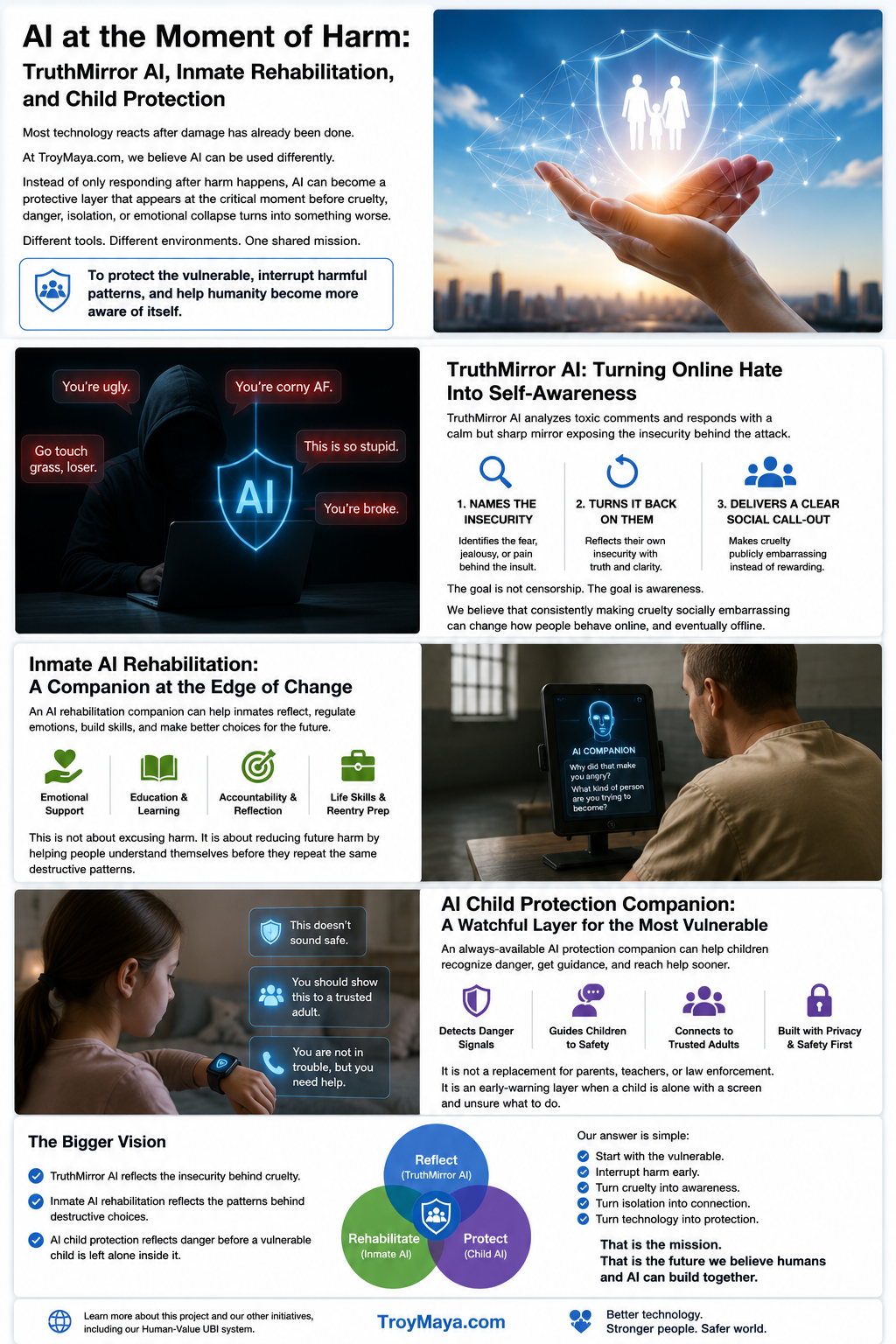
Most technology reacts after damage has already been done.
A hateful comment is posted. A child is targeted. A person in prison spirals deeper into anger, shame, or hopelessness. Someone gets hurt, and only then do systems step in.
At TroyMaya.com, we believe AI can be used differently.
Instead of only responding after harm happens, AI can become a protective layer that appears at the critical moment before cruelty, danger, isolation, or emotional collapse turns into something worse. This vision connects three of our most important projects: TruthMirror AI, an anti-bullying and behavior-awareness agent; an AI companion system for inmate rehabilitation; and an always-available AI protection companion designed to help keep children safer.
Different tools. Different environments. One shared mission.
To protect the vulnerable, interrupt harmful patterns, and help humanity become more aware of itself.
TruthMirror AI: Turning Online Hate Into Self-Awareness

The internet has trained people to be cruel faster than they can think.
A creator shares something honest. Someone replies with mockery, insults, or humiliation. The cycle continues because online cruelty is often rewarded with attention, laughter, or silence from everyone watching.
TruthMirror AI is an anti-bullying and behavior-awareness app designed to interrupt that cycle.
Instead of simply deleting toxic comments or fighting cruelty with more cruelty, TruthMirror AI analyzes harmful comments and responds with a calm, direct mirror. It reflects the insecurity, fear, jealousy, shame, or pain that may be hiding underneath the attack.
The goal is not censorship.
The goal is awareness.
TruthMirror AI is built on a simple idea: people behave differently when a mirror appears at the exact moment they are about to be cruel. If someone insults another person’s looks, intelligence, money, creativity, or social status, the AI can respond in a way that makes the attack feel less powerful and less socially rewarding.
Over time, if this type of tool is used across enough accounts and communities, it could help make online cruelty feel embarrassing instead of entertaining. It could train people to pause before posting, recognize what they are really revealing, and choose a better way to communicate.
TruthMirror AI is not about silencing disagreement. People should be able to debate, criticize, challenge ideas, and speak honestly.
It is about separating real disagreement from humiliation.
It is about making people think twice before turning their own pain into someone else’s wound.
Inmate AI Rehabilitation: A Companion at the Edge of Change
If we want to build a better future, we cannot only start with the comfortable, successful, or socially accepted.
We have to start where the system is under the most pressure.
Prisons are filled with people who often carry trauma, anger, addiction, shame, abandonment, impulsivity, and years of survival-based thinking. Many inmates are not given enough consistent emotional support, education, mentorship, or healthy reflection to truly change. Punishment alone does not teach someone how to become a better human being.
That is where an AI rehabilitation companion could help.
The idea is not to replace therapists, counselors, teachers, correctional staff, or human accountability. The idea is to create an additional support system that is always available for reflection, emotional regulation, learning, planning, and personal growth.
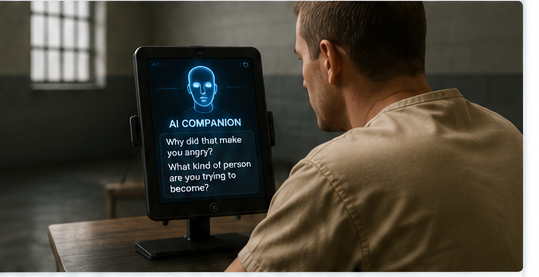
An inmate-facing AI companion could help a person slow down during moments of anger, talk through choices before acting, practice empathy, understand consequences, build job skills, study, journal, prepare for parole, and process difficult emotions in a structured way.
For many people, transformation begins when someone finally asks the right question at the right time.
- Why did that make you angry?
- What were you protecting?
- What happens if you react the old way?
- Who gets hurt next?
- What kind of person are you trying to become?
An AI companion could help create those moments consistently.
This is not about excusing harm. It is about reducing future harm by helping people understand themselves before they repeat the same patterns. If AI can help even a small percentage of incarcerated people become more stable, reflective, educated, and emotionally aware, the impact could reach far beyond prison walls.
Families could be changed. Communities could be changed. Future victims could be spared.
AI Child Protection Companion: A Watchful Layer for the Most Vulnerable
Children are growing up in a world that moves faster than parents, schools, and traditional safety systems can monitor.
They face online predators, bullying, manipulation, loneliness, explicit content, peer pressure, coercion, and emotional crises that can unfold quietly through phones, games, chats, and social platforms. Many children do not tell an adult the moment something goes wrong. Some are scared. Some are ashamed. Some do not even understand that what is happening to them is dangerous.
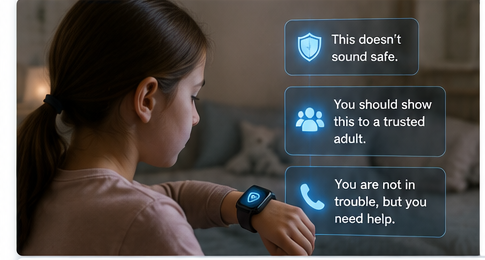
We imagine an always-available AI protection companion designed to help children stay safer by giving them a trusted, age-appropriate support layer that can recognize danger signals and encourage connection with safe adults.
This could take the form of a wearable device, app, or child-safe AI companion that is designed with strict privacy protections, parental controls, emergency escalation, and clear boundaries. It would not replace parents, guardians, teachers, therapists, or law enforcement. It would not be a magic shield.
But it could become an early-warning layer.
If a child receives threatening messages, grooming language, bullying, coercive requests, or signs of emotional distress, the AI could help the child understand what is happening and guide them toward immediate support. It could say, in simple language, “This does not sound safe,” or “You should show this to a trusted adult,” or “You are not in trouble, but you need help right now.”
The goal is to give children a protective voice in the moments when they are alone with a screen and unsure what to do.
Done responsibly, this kind of AI could help close the gap between danger appearing and an adult finding out.
That gap is where too much harm happens.
The Common Thread: AI That Interrupts Harm Before It Spreads
TruthMirror AI, inmate rehabilitation AI, and AI child protection may sound like separate projects, but they are really three versions of the same deeper idea.
AI should not only be used to make people faster, richer, more entertained, or more productive.
AI should also help humans become less cruel, less reactive, less isolated, and less likely to harm each other.
TruthMirror AI focuses on public behavior. It challenges cruelty in online spaces.
The inmate AI companion focuses on internal transformation. It helps people reflect before old patterns become new damage.
The child protection companion focuses on early safety. It helps vulnerable children recognize danger and reach help sooner.
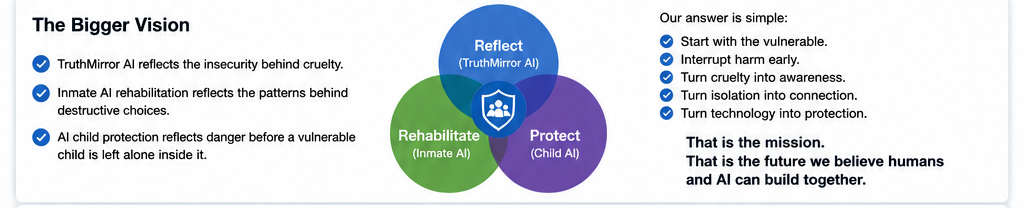
Together, these projects form a protective triangle:
- One tool reflects harmful behavior.
- One tool rehabilitates harmful patterns.
- One tool protects people most at risk of being harmed.
This Is Not About Control
One of the most important things to say clearly is this:
This vision is not about censorship, surveillance, punishment, or replacing human judgment with machines.
It is about using AI carefully and ethically to support human dignity.
TruthMirror AI should not silence honest criticism. Inmate AI rehabilitation should not replace real human programs or due process. Child protection AI should not become invasive monitoring without safeguards, consent structures, privacy protections, and adult responsibility.
Every one of these tools would need careful design, testing, oversight, and ethical boundaries.
But the core idea matters.
If AI is powerful enough to influence human behavior, then we should use some of that power to reduce cruelty, protect the vulnerable, and help people become more self-aware.
The Bigger Vision
We believe one of the most important things AI can do is help humanity see itself more clearly.
Not flatter us. Not manipulate us. Not simply entertain us.
But reflect us.
TruthMirror AI reflects the insecurity behind cruelty.
Inmate AI rehabilitation reflects the patterns behind destructive choices.
AI child protection reflects danger before a vulnerable child is left alone inside it.
This is the larger mission behind TroyMaya.com.
We are exploring a future where AI companions, AI protection tools, and emotionally intelligent systems help people heal, grow, and make better choices. A future where AI is not only used by corporations to extract attention or automate labor, but also used to protect children, support rehabilitation, reduce online harm, and strengthen human dignity.
The question is not only whether AI will become more powerful.
The question is what we will teach it to care about.
At TroyMaya.com, our answer is simple:
- Start with the vulnerable.
- Interrupt harm early.
- Turn cruelty into awareness.
- Turn isolation into connection.
- Turn technology into protection.
That is the mission.
That is the future we believe humans and AI can build together.